
Rachel Anderson: My name is Rachel Anderson and my role at SQFI focuses on business development and global strategy working closely with retailers, certification bodies, suppliers, and industry stakeholders all around the globe. Today's session is designed to help organizations understand both the business value and practical implications of SQF Edition 10. Edition 10 is more than a code update. It's an opportunity to strengthen food safety systems, improve operational readiness, and better align with evolving retailer and industry expectations. Our goal today is to provide context around the value of SQF certification, insight into what is changing in Edition 10, and practical guidance to help prepare now for implementation in 2027\. The earlier organizations begin preparing, the smoother and more effective the transition will be. I'll begin with the business perspective and then LeAnnn Chuboff and the technical team will walk through the Edition 10 updates and audit-ready considerations in greater detail. Okay, we can go to the next slide. I love this picture. This picture reminds us why this work matters.
Behind every audit, corrective action, food safety investment is ultimately a consumer, a family, a community relying on the integrity of the food supply chain. Food safety is not theoretical. It is deeply personal for us all. And increasingly, consumers, retailers, regulators, and brand owners expect organizations to demonstrate not only compliance, but credible and verifiable food safety systems. That expectation is one of the reasons SQF continues to grow globally and organizations of every size are recognizing the value of that investment. Next slide. one of SQF's strengths is the breadth of its community. Today, SQF supports more than 14,000 certified sites across 55 countries in six continents. From small and midsize businesses to some of the world's most recognized brands, food safety certification is no longer viewed as simply a quality requirement. It is increasingly seen as mark as a market access tool, a risk management strategy, a consumer expectation or customer expectation, and as a competitive differentiator.
Organizations invest in SQF because it helps build trust, credibility, and consistency across the supply chain. In many cases, certification is what allows suppliers to enter and remain in conversations with major retailers and customers. I love this slide because it is really the central message of what I want to emphasize today. SQF should not be viewed as the as a checkbox exercise. The strongest organizations use food safety strategically because strong food safety systems often reflect strong operations overall. Better discipline, better traceability, stronger accountability, more consistent execution, and reduced risk. The organizations that perform best operationally are often the same organizations that perform well during their audit. And Edition 10 continues supporting that mindset through greater clarity, consistency, and readiness. So what specifically makes certification valuable from a business perspective? First and foremost, market access. Many retailers and food service organizations either require or greatly prefer GFSI benchmark certification. Certification creates a common framework trusted across the industry.
Second, brand protection. Food safety incidents can move quickly across the supply chain and significantly impact brand trust and reputation. SQF certification demonstrates commitment to risk reduction and a functioning food safety system. Third, supply chain consistency. SQF supports across sectors across the supply chain from primary production through manufacturing, storage and distribution, retail, food service, and more. That consistency helps align expectations across partners. Fourth, credibility. Strong audit outcomes should reflect operational effectiveness, not simply good paperwork. SQF's model is designed to distinguish mature food safety systems from those that only appear compliant on paper. And fifth, community and support. SQF is more than a standard. It is a global ecosystem supported by training, guidance documents, practitioner resources, certification bodies, and a strong food safety community. Those same resources will support organizations as they prepare for Edition 10. You'll learn more about these resources later in the presentation.
With that business context established, I'd now like to transition to LeAnnn Chuboff and the technical team to walk through the Edition 10 updates, audit readiness considerations, and details on implementation resources to help you on your SQF journey. Over to LeAnnn.
LeAnn Chuboff: Thank you, Rachel. Thank you for providing us that excellent overview of our program and really emphasizing why we do what we do. So, I appreciate that. Hello everybody. My name is LeAnnn Chuboff. I'm the vice president of technical affairs at SQF. and I wanted to talk to you a little bit about why we built SQF, why we did what we did. So, I don't know if you remember for those of you that have what edition you're on. So, I've been, I think, through eight different editions if you count all the sub editions. So, I don't know. You could put it in the chat how many editions you've been through. If this is your first edition or you're getting new with SQF and you on zero, this is maybe your zero, your first time approaching SQF or maybe you started with 9, 8, 8.1, 7, six. I know we might have some fives addition too. So, we have some really good people like excellent resources in here. This is amazing. Wow. Amazing. Yeah, even if you don't remember the addition, but what year you started. So, yeah, somebody 2000. Holy smokes. So, this is amazing.
Thank you for sharing that. but the last time we released was edition nine and that was in 2020. So, that was six years ago and a lot has happened since then. food safety has emerged, new technology has come across. so we took that opportunity that time to gather what we have been seeing to strengthen our food safety system. So that's where we did. We also recognized that GFSI released their own new requirements and that meant that we had to do an re-evaluation of our own program. And I want to emphasize that we didn't do this alone. I know some of you already on this webinar has already contributed to our 16 different technical working groups. So, you're part of the 170 volunteers that helped us address and identify our needs. Food safety culture being one of those needs. Tammie is going to go into further detail about that. also change management, environmental monitoring. We've been getting some of those questions in and hopefully we'll be able to respond to some of those as well. So, in the next slide, I really want to go over what our approach is and when it's going to be released.
So, I know I know we've had some questions like when will audits begin and that's always the number one question we get and I wish I could give you a solid answer. I can guarantee you though they will not begin before January. We are in the process of submitting our application to GFSI for benchmarking and once we solidify those dates, you'll get a more definite time of when audits will begin. But you have this entire time to start preparing and understanding what those changes are and so that you could be ready for that Edition 10 audit. Knowing what I know with Edition 9 to Edition 10, you could prepare for Edition 10 and still be ready for Edition 9. There's one requirement and Tammie will go over that regarding proficiency testing. That might be the only thing that you would want to consider with your Edition 9 to edition 10 audit. But even if you prepare for Edition 10 and you're audited to Edition 9, you're still on your way and you're improving your food safety system.
So, there is a lot of opportunities and hopefully we'll answer some of your questions here today. what we are going to share is more information about how to access our new digital experience. We're going to go over those technical changes, answer some of your questions, and give you some of the resources that are going to help you guide you in implementing your SQF program. And so with that, I want to start where we where I think you all are interested and where you want to hear is oh before I do that one more one more slide. I do want to introduce some new codes that we have in production. Food safety services as well as agents and brokers. So food safety services is a code for those providers that are doing a service for the site. It could be laundry service, it could be calibration services, it could be a pest control service. Those are services for the site. And now we'll be able to have a certification program a solution for them. And for agents and brokers, again, it's a service code. So these are individuals or organizations that are procuring food or food manufacturing material or even non-food material for sites.
And this is an in organization that doesn't store or distribute food but only purchases and sells food. So we'll have a certificate solution for that as well. And now I want to introduce you to Elizabeth. Elizabeth will be talking about edition 10 and how to access them from a digital perspective. So Elizabeth, thanks for joining.
Elizabeth: Awesome. Thanks LeAnn. my name is Elizabeth and I am the compliance specialist here at SQFI. so a little bit about the code and how it's been different. We've gotten lots of questions of how do I get my PDF and it looks different for Edition 10. So a little bit about why we did that and hopefully it can give you a little bit more insight of how to use it and better use that situation. so most of you have probably figured out how to download the code, but you can go to our code selector. and it is currently available in all languages. So we offer nine different languages. there was no waiting. So you can go right now and just go, hey, I need to put it in Spanish, I need it in French. and it is available there for you. And you can customize your code. so if you have one food sector category, your code will look the same as it did as Edition 9. But if you view multiple food sector categories across multiple codes, they now combine. which I think is a really great asset. so you can see that. and you can use those for the different modules for a module 2.
It calls out what those differences are. and then you have the option to download your code just like you did for previous editions or you can use it online. And I'm going to cover a little bit why the benefits are of what you can do with it if you do use it online. so we've really streamlined the code. so you're not sifting through those multiple codes. your codes are combined and we do call out those module 2 differences. and if they are exactly the same. So, say you have pet food and food manufacturing and if the code requirements are exactly the same, you don't have to look at it twice. It will only show up once. and it is fully integrated on our website. So, when you go to part A specifically, there are links within part A. So, if you use it from our code, from the website, you can just click on it. You don't have to go, "Oh, well, how do I get to the assessment database? Where are those resources we're talking about? how do I get to that training dashboard? You can go okay well I can just click on that and it'll take me directly to that link.
So very cool resource that we've done and like I said it is automatically translated not even just the code but also the other resources that we've provided understanding that we are a global organization and we want to make sure that we are serving all of our customers all the sites into the languages that they require. one of the features that I like, so I came from an SQF certified site and there are always different things that you're looking at. maybe today it's supplier approval, maybe tomorrow it's going to be environmental monitoring and you can collapse certain portions of the code. So you don't have to have all of it right in front of you, but you can pull up just supplier approval. So you can just focus on that one section as that's what you're working on right now. and you do have that option of having it on any digital device. So whether it's a computer, a tablet, your smartphone, if your site allows it, you can carry it straight out onto the floor, which is very beneficial. Excuse me. and something else if you can one of our AI benefits is that you can use it straight there.
So now that it is embedded into our website and it's not just a PDF file, you can use AI. So you can ask it questions of where do I find this? So what is the standard number? or maybe it's where do I find training? so you can use AI to find different things in the code. which is a very cool different approach that we've had that was not available for edition 9 or any of our previous editions. and also if you're expanding your business, so say you only have one code right now, but you're considering adding something else. Maybe it's a different line, a different type of product and you're going, I need to add a different code. You can already go in there and go, okay, well, what are the differences? What else would I need to account for if we do go that direction? So, all of those are great benefits that we have with Edition 10 that we did not have with previous editions. and with that, I'm going to hand it back to LeAnnn.
LeAnn Chuboff: Okay. Thank you, Elizabeth. I find the AI agent very helpful. So, check that out and you can ask, just ask your AI agent when it's digital like that, anything from it. So, I think that's a pretty cool option. so I want to talk to you about part A and I first want to emphasize, please read part A. So part A was redesigned. So it's one part A for all codes. So I don't know who's being represented on our webinar today. Perhaps you could just chat in what product you have. if you're dairy, if you're food manufacturing, packaging, storage, and distribution, or maybe what code you use, food manufacturing code or the feed code or whatever. So, chat that in real quick. And I just kind of want to see where everybody is. but what I want to do is say emphasize that we now have one part A. We've streamlined it. we made it easier for everybody to read and understand what is in part A cuz it's a very important part and a very important piece of your SQF program.
It has all the components in there of how to get certified initially, maintain your certification and what happens when things go wrong if there's a suspension or a withdrawal and what that process is. It has a complaints and an appeals program in there. So, take a look at there. It's more than just scoring in part A. So, it's all one part A. It's a And so, please take an opportunity to review that. One of the things that we did is we eliminated the word exemption. So, now sites, it's called an exclusion. And we did that on purpose because it seemed that when we say exemption, the site never has to do it. And there are opportunities where the scope might expand. And so it's more of an exclusion than an exemption. we even eliminated that from our primary responses. So there exempt is not an option. So it's an site exclusion. You can still exclude a product or a process. But we changed the terminology and now it's defined in our glossary as well. We also expanded the close out of corrective actions. So this is extended now to 40 days and we did that to align with our new timelines for appeals and complaints.
So we've established timelines for appeals when a site can appeal a non-conformance or certificate decision. and the site and complaints as well as when a site can file a complaint about the audit or the auditor. as it relates to that particular audit cycle. So the close out of corrective actions is now 40 days. and like I said it aligns better with our cor our close out of appeals and complaints. The other change that we made is the approach to the audit. So what we typically have right now is sites as when they're doing their internal audit or even auditors just going down and doing almost like a checklist audit. That's what we would call a checklist audit starting at 2.1.1 and ending at 11.8.1 or whatever it might be. So it's just a checklist audit and what we need more is a systems approach. That's what SQF is about. It's about understanding how you can build a food safety system, not tick a box. So building a system means programs build on each other. Your pest control, your sanitation program, for example, complements your pest control program, right? The two work together.
So it's not just to tick a tick a box and make sure everything is done and dusted, but it's really a systems approach. And so we want to have a different approach to the audit itself. And that's going to be a vertical audit approach. And the vertical audit approach is really a really enhanced traceability exercise. It takes a product that you make at your site when I see a lot of bakery as well cookies and pizza and dairy manufacturers. I see meat processors that are jo that have joined us today. So it re what we would do is pick a product. So, if it's a cookie, we would pick a line, a bag of cookies at the end and trace that product not just from the raw materials or finished product or even the smaller ingredients that go into it, but the people that made that product and what were their training experiences, the sanitation for the day that product was made, the GMP checks and the daily checks that were done for that day, the internal audit that covered that particular product.
So this vertical audit approach is really testing the system in a more system approach and that's what we are looking for in our vertical audit. the other change that we made and this is also reflected in the requirements themselves but a recall response is now required if a site experiences a recall not just an outbreak or one that involves illnesses or deaths but any recall a response is required. So SQF wants that information not just to in see that the site is following the no protocol but we take that information and sanitize it so that we get what we see are causing food safety issues. So no names or sites, but we want to look at the issues, what the corrective actions were to see, do we need better training? Do we need a different requirement? Are auditors not looking at specific things at the site so that we can better SQF and better food safety along the supply chain? The last the other thing that we did is a new CB transfer policy. And what this means is if a site wants to transfer from one CB to another, it has to be outside its audit window. So if a site's audit window, it's plus or minus 30 days.
So it's a 60-day audit window in a sense. The site can't transfer 2 days before the end of their audit window. And that's what we're experiencing right now. So it has to be outside its audit window. it can't be within those 60 days if a site wants to transfer to a different CB. And in the next slide, I'm going to go over the scoring update just real quick. I'm sure you all have heard about the scoring and what we have done to the scoring. So, in an in summary, what we did is we added two new primary responses, a core clause minor and a core clause major. And the example I have on the screen here is for food manufacturing. And it seems like that's what's really primarily represented on this webinar today. But note that each man each code has its own core clauses. Many of them are the same. Management commitment is the same. approved suppliers, the food safety plan, corrections, corrective and preventative action are on there. Product identification etc. So some of them are very similar but many of them might be different.
Primary plant for example will have water, water quality, water systems, water sources that is going to be a core clause because the intent of the core clause is to look to see what is at risk in that particular category. So they do change. So, if you're with a site or using a code other than food manufacturing, make sure you look to see what those core clauses are and they're identified within the code itself to better understand where that risk is at your site. and then we also eliminated the ratings in a sense. We still have a score. we expanded the top score from it used to end at 86 and now it's at 80. So 80 to 100 certified, 70 to 79 certified with the surveillance, meaning the site will have a six-month announced surveillance audit. And 0 to 69, it's a failed if you're an initial certification. And if you are already have a recertification, then it's certified with an unannounced surveillance. So the idea behind this is to really kind of eliminate the pressure on the score and embrace what the SQF audit will have. I think it will bring some relief to the auditor as well as the site.
And with that, that's the last I'm going to talk about part A and I'm going to give the my time to Tammie Van Buren who's going to walk you through the system elements and those notable changes. Tammie. All right. Thank you, LeAnnn. I am Tammie Van Buren. I'm the compliance manager here at SQFI. Again, welcome. Thank you all for coming. I'm going to give you a quick rundown of the changes to Edition 9. this is a summary. I'm not going to cover line by line because you all wouldn't want to hang out with me for the next couple of weeks. but I will give you a summary. So, I'm going to start in module two, the system elements. keep in mind that food manufacturing is kind of the overarching module 2 and that almost all of the changes that are in module 2 food manufacturing also apply to the other codes as well. So at the end I will talk a little bit about the other codes because there may be a few additional changes. but if I'm talking about it here on food manufacturing, it's probably the same change in whatever other code you may be certified to. So, let's just jump into 2.1 management commitment.
There were some pretty significant changes there. I will just say overall we eliminated a lot of redundancy putting things together, combining things where it needed to be combined. but with that we were able to reduce the number of elements and an element is 2.1.1.2 that's an element overall by about 30%. But we didn't really reduce any requirements other than the one LeAnn mentioned about of the proficiency testing and I'm going to get to that in a couple slides here. but management commitment looks a little bit different. We went and again did some combining, did some clarifying language and added a few things because GFSI added some things. So 2.1.1.2 positive food safety culture. before we just said food safety culture. in reality, everybody's got a food safety culture, but we're looking for a positive one. So that is a that is a an addition for Edition 10. we also had to add the requirement that a demonstrated commitment must be there for all employees and that was a GFSI edition.
And this is one that I'm I'm just thinking people are going to miss it. because they're going to be so focused on 2.1.1.3 food safety culture assessment plan that you're going to miss that 2.1.1.2 added that demonstrable commitment from all employees. It used to be really focused on site leadership and site management, but it's all employees have to demonstrate that commitment. food safety culture assessment plan. I mentioned it. all I want to say here is let's not confuse a food safety culture plan, which is not required by Edition 9 or Edition 10, with a food safety culture assessment plan. So, as far as your food safety culture plan goes, whether it's written or not, maybe you have a survey. Maybe you do a survey. A lot of our sites do, to get feedback on the food safety culture. Well, the assessment plan should talk about how you're going to assess the results of that survey and do something about them. So, the auditor is not just going to be looking at did they do the survey, but as far as the assessment plan, they're going to be looking to see that you're assessing and reacting to the results of that survey.
And that's just one example. Okay? there are four different key elements under that food safety culture assessment plan. Make sure you read those. 2.1.1.5, we clarified the responsibilities for the SQF practitioner. we added use of the logo. as the compliance manager, I unfortunately have to deal with unauthorized use of the logo or improper use of the SQF logo at almost a weekly basis. And so this will now make it auditable and it falls under the responsibilities for the practitioner to make sure their site is using that SQF logo properly. we also changed the word practitioner being employed by the site to practitioner employed at the site. That better reflects the intention of what a practitioner is. They're someone that's there in the weeds. They're there with you all day every day. They're, overseeing and managing that food safety program. And so that word at better conveys the intent of what a practitioner is. 2.1.2.1 and 2.1.2.2. we often see those confused. So annual management review and a monthly update. So annual management review is that look back once a year at the prior 12 months. Okay. So h how's my trending?
How's my culture looking over a 12-month period of time? And there's a list of things that have to be covered in that annual management review. The monthly updates are the here and now. We're talking about when's our customer coming in next week. when's our SQF auditor coming next month? So, it's about the here and now. Equipment failures that resulted in a food safety issue, things like that. What happened today? yesterday, this week, it's about the here and now, okay? Or the immediate future. And people often get those confused. So, we added some clarifying language. 2.2 documentation and records. We combined module 2 record requirements for annual and implementation into one spot. Hopefully, that works out and I hope you all like that. 2.3 specification, product development, supplier approval. we included a requirement to assess food safety requirements for reintroduced products.
So, we've all had situations where a customer says, "I don't want to buy that anymore." So, you obsolete or archive it and then two years from now your sales department sells it to somebody else and suddenly we're going to make something we haven't made in over a year. we need to make sure there haven't been any changes. so assessing any possible changes to reintroduced products. We have a new clause 2.3.5 and I say it's for enhanced change management because change management is already there in Edition 9. the only thing we added for Edition 10 is you have to have a documented change management procedure but everything that goes in that is currently in Edition 9 and we just moved that from 2.3.1 and other places. Okay 2.4 let coup advance that slide 2.4 we added a review of customer and company requirements. it already talked about regulatory requirements. It talked about code requirements.
We just added customer and company requirements there. we also rewarded to include regulatory action or involvement because oftentimes we thought we needed to get a recall or we needed to get a regulatory warning letter before we needed to notify SQF or notify our CB. And we rewarded that because sometimes you're involved in an outbreak and sometimes the FDA or your regulatory body comes in and I mean I hate I don't want to even say it out loud but I will shuts your plant down. So any type of regulatory action like that we need to make sure that we're letting SQF and RCB know. 2.4.3. We just it had to be said. It was implied, but the leader of your HACCP team has to be HACCP trained. We realized we didn't specifically say that. and not every team is led by the practitioner. So, the leader of the HACCP team has to be HACCP trained. here's that one that LeAnn was talking to you about. Removed the frequency of proficiency testing. is still required but is no longer required to be done on an annual basis. So unless something's changed, you don't need to repeat that proficiency testing every year. 2.4.8.1. This is the one.
I spend a lot of time on LinkedIn, on social media. I'm looking at what consultants are saying about addition n 10. I'm looking at what sites are saying. And this one little element is the one that I'm seeing so much misinformation about. So 2.4.8.1 says that a risk assessment is mandatory to determine the level of environmental monitoring program needed. And I'm seeing everyone write these blogs and create these trainings and doing these webinars that says SQF made environmental monitoring a mandatory requirement. What we made mandatory was that risk assessment. So let's make sure that we're when we're getting trained, we're getting trained by reputable sources. And Christiey's going to talk to you about that when I get done about where you should be going to get your training. so validation and verification we've added so much within module 2 about root cause analysis and problem solving. because how many times do you all see a duplication of or a repeat of non-conformances and it's because your first corrective action failed.
I look at corrective actions on a daily basis. may have seen some of those that people in this webinar have submitted and I we just need to be a little bit stronger on our root cause analysis and so we added it to the code. we also added corrections to the code as well because it that was not specifically stated in Edition 9. we also separated those monthly or those regular inspections from the internal audits because people were confusing those and they thought that their GMP inspections covered their internal audit requirement and it does not. Those are two separate things. So we separated them in the code so that hopefully that will reduce the confusion there. product traceability and crisis management recall test needs a risk eval evaluation outside the site's purview and I know every one of you all are scratching your head going Tammie what does that mean so let's think about there's a there's a government program here in the United States where I'm located that provides free food for expectant mothers and babies And if a product on that program were to be recalled to the point to where the shelves are empty, that's a problem.
So what we're asking is that if you're involved in something like that, a program outside of your purview, that as a part of your risk or your recall test, that you are including how you're going to communicate to the group or the agency that's managing that outside program. So that's what we want you to do there. Just consider it as part of your recall test. we also rewarded requirement for notification of a food safety event just to be clear because I mean it's probably once or twice a week we get notification and somebody says I'm not sure whether I was supposed to notify you but I'm doing it anyway. So a little bit of clarification there. And then notifications for edition 10, not edition 9. Nothing's changed for edition 9, but for edition 10 will be done through our website and not through email. You all know how emails get lost, so we're going to do it through our website. Okay, next slide. 2.7, food defense and food fraud. it was all I mean it was always required that you considered internal and external threats for your food defense. But I mean let's be realistic.
How many of you all when you do your food defense test always do it on an outside external threat? Someone trying to get in the building. So the idea here is we also need to consider internal threats. So what if a disgruntled employee wanted to harm the product? how are you going to catch that? And so we add we specifically added that you must consider internal threats. we also moved the training to 2.9 and added a little bit more meat to that and I'll talk about that in training in just a second. allergen management we did a lot of removal of redundancy there so that is shortened up but none of the requirements really changed. but we removed references like to training that went to 2.9. there was some validation that went to 2.5. So again just eliminated redundancy. training 2.9 we did remove a clause there and just combined it all into one. but we also identify that there needs to be frequency of training considered. and then we added some new elements where we pulled all the references to training from everywhere and we put them under 2.9 and in some cases we added an assessment.
So, anything that was critical, that training now needs to be assessed. And having someone sit in a training room and clicking through slides and signing a piece of paper saying, "I understand," is no longer acceptable under Edition 10. There needs to be some type of an assessment. Okay, next slide. All right, GMP's module 11s. we didn't make any a lot of drastic changes. Again, we've removed some redundancy, combined some things. So, all of your risk assessments are located in 111. All cLeAnning references out of 111 move to 112. we added some verification activities. screening procedure for infectious disease. that was in an amendment for Edition 9. That's now been put into the C Edition 10. we added dry ice because we only ever mentioned regular ice. So we added dry ice. metal detector validation kind of moved under 2.5\. We changed the wording in edible waste to human food byproducts which better conveys what it is when you're like sending your byproducts to animal feed. Okay, next slide. All right.
So again, all Edition 10 codes were, reviewed by independent technical working groups. a lot of the general changes, as I mentioned, follow food manufacturing. But here are the key changes, for the other industry-based codes. And so food sector packaging some terminology clarification rework there were some specific clauses that were called out that under food manufacturing they were moved somewhere else. So just a little bit of changes there but the great thing is as Elizabeth said when you select multiple codes it will tell you what those changes are. storage and distribution eliminate a lot of redundancy. They did add that environmental monitoring risk assessment. So don't get crazy on me and think ah we now have to do an environmental monitoring program. They added that risk assessment. they also removed mention of hand dryers. That was our only code that said hand dryers were allowed. but again it needs to be risk-based. so they just yeah move that to a risk assessment rather than just a straight out allowing hand dryers because hand dryers are some nasty things. All right, pet food. some label claim validation was included.
Enhanced allergen requirements for human grade pet food. let's look at the primary changes on the next slide. different things, clarified complaints to food safety related because just remember these are all food safety codes. so unless you're certified to the quality code, the auditor should be focusing on those food safety complaints and not quality. product development clarified to focus on new commodities. there were some references updated to agricultural water just for clarification. a new glossary definition. We didn't talk about the glossary today. If you have it, if you haven't read the glossary, you should. That's got some great information in it. then we've got a new element for maximum residue limits. purchasing chemicals updated to include some additional primary chemicals that weren't there before. Packhouses, a new requirement for reusable egg containers. post-harvest chemical application was new.
Ambient air testing based off of a risk assessment. and then primary animal again just some clarification there on storage pest prevention clarified for large animal farms and wet water systems clarified to include surface water. And with that, I think I get to hand it off to Kristie Grzywinski, and she's going to talk to us about resources. Kristie, take it away.
Kristie Grzywinski: Hello. I am Kristie Grzywinski, technical director at SQFI. I'm responsible for our training programs, our training tools. I'm going to talk a little bit about our resources, all the resources, not just the training resources. So to support sites in their implementation of SQF edition 10 and edition 9 as well. all of these resources are available for 9 and 10. SQFI provides a host of useful tools on the sqfi com website ranging from webinars and their recordings such as this FAQs, checklist, change documents, and the ever popular guidance documents. We also have a specific SQF Edition 10 conversion course in both self-paced and instructorled formats and a number of webinar recordings on the SQFI YouTube channel. Next slide. Take a screenshot of that one. So, here's a little bit more about our resources. we about the guidance documents they de dive deep into specific topic areas to explain the why behind some of the important sections of our codes. They're topic specific.
We have 27 of those and we've updated for Edition 10 the guidance documents on the environmental monitoring program and corrective and preventative action and we have new guidance documents for change management and for the food safety culture assessment plan. So a little bit more about that conversion course. sites can prepare for a smooth and consistent tradition transition to edition 10 from 9 to 10 with the conversion course. So, the online course offers self-paced learning and downloadable resources. And the instructor-led course provides an opportunity for real time interaction, personalized guidance, answer to a lot of these questions that you're getting here that you're offering here and peer collaboration. So, the conversion course does more than just describe the changes to the code. It also explains why they were made and then helps you to begin implementing those changes effectively. So, where do you identify that gap? And now, how do you begin making that change to your policies, your pro your procedures? And more than 1,100 sites have already purchased the online conversion course.
And we have updated, we being me, because I'm responsible for the training program. We've updated all of our instructor-led training program as well as our online training programs so that they align with Edition 10. So to find out more about training, hit our training tab on our website and you can go to the training calendar for all scheduled trainings. lastly, SQF Unites brings together food safety professionals, manufacturers, retailers, and certification experts from across the globe to share solutions. 2027 SQF Unites will be held March 23rd, 2027 at the JW Marriott Tucson Starr Pass in Tucson, Arizona, US of A. Next slide. Today's practitioners need to be analysts, training trainers, I mean sorry, communicators and leaders and lifelong learners. So consider obtaining your certified SQF practitioner credential. If you are an a certified SQF practitioner, put that in the chat. this is a specific credential designed to elevate the impact your impact, sharpen your skills and demonstrate your leadership as an SQF food safety professional. This is a true personnel certification, a true credential.
Simply taking the training like the implementing course is not a certification, it's a training course. This gives a true certification credential to the individual who goes through this very rigorous credentialing process in partnership with our credentialing partner Exemplar Global. And it also provides your organization, the companies that certifi that employ certified SQF practitioners the ability to highlight their leadership in food safety quality and setting themselves apart from the competition. All right, thank you for all the questions in the chat. Next slide. So, a few resources. take a quick screenshot of this. so where if you do have further questions after this webinar throw, you can send them over to these inboxes info\@sqfi.com. It has anything to do about how to get started, how to register, any questions about how to get your corrective actions into the database, how to change the name or the address in the in the audit database. compliance @sqfi.com for all CB questions not related to registrations or the database. any sort of technical questions that you have.
You can shoot questions about the training courses to my training inbox and you'll get either Michelle or myself. And then of course all your re recall notifications go to foodsafetycrisis@sqfi.com. And now the moment that you've all been waiting for. Our very own Rochelle will be will be reading out those questions that you've diligently been putting in the Q&A and the chat box. Go ahead Relle. Take it away. Hi everyone. [clears throat] I'm Rochelle. I'm the technical assistant. before we get the questions and answers going, I just want to say that this will be sent out tomorrow. You will receive this recording as well as the slides to your emails that you register with tomorrow. so with that being said, the first question is to Elizabeth. Does access via smartphone require an app or just a browser? Can you do AI add-ins like say work with Claude in a code?
Elizabeth: Yeah. So, great questions. you do not have to download any kind of app to access the code by using a smartphone. we've tested it on multiple different devices. so hopefully nobody has any kind of issues. they've all been resolved. But again, do not need any special kind of app. you can just do it on the browser. and for AI, you can upload the code and use it in any different AI. what we I don't even know which one we had in our example. but it was just the one of those examples, but all different AI's resources can be used. which is a is a really cool feature that we have. Okay, next question. LeAnnn, how many products will go through the vertical audit? Is it by category only?
LeAnn Chuboff: So that's a great question and the it will be based off of how many HACCP plans you have. So it depends it really I wish I could say one but if you're a very large multiple site with complex operations and multiple SKUs and multiple HACCP plans you'll have to go through multiple vertical audits. So that's still in progress. the information on how to train auditors as well as how sites can prepare that's it forthcoming but you yourself can prepare by doing your own vertical audit by picking any SKU any product off the shelf and doing that intense traceability linking that particular code or that lot number to who made the product sanitation etc. So go beyond your basic traceability audit but preparing yourself for that as well. Next question. Tammie, if we were to switch a certification body for multi-site certification under Edition 10, how does that work?
Tammie Van Buren: So you would need to make that switch before your audit window opens for your central site. your central site audit is required to be prior to and I know currently we have some sites that are backwards and we're in the process of getting those corrected. but your central site audit comes first. So, whenever that central site audit window opens, you're not allowed to switch CBs after that. Also, does the SQF practitioner backup also need to work at the at the site or can be or can it be corporate representative? I would one of my favorite phrases is read the code. So, I would encourage everybody to really read it start to finish. Okay? It's it's actually a good read. but you'll notice we added some language there that says the primary practitioner shall be employed at the site while acting as the primary practitioner. So that leaves it open for if your primary practitioner leaves your backup then has to step into that role then they would be expected to be employed at the site.
So you could have a corporate person as your backup. which really under addition nine that's not really clarified. but at the point to where they need to be the primary then they need to be employed at the site. So hopefully that opens it up a little bit and provides some more options for sites. Kristie, is module 13 going to have the same changes as module 11? I am in packaging. Wait a minute. The question disappeared. Wow. I think LeAnnn moved it. I am in packaging and we adhere to module 13, not 11. Module 13 usually comes late.
Kristie Grzywinski: You can go ahead and take a look at module 13 right now. It's available on the website as well. All the codes were released on March 2nd. So, the reason that Michelle had me answer this is because I responsible for the technical working group for the, food sector packaging code. You'll notice there's a new name. the changes, align with addition, with module 11 except where there are specifics for packaging. Okay, that's probably what you knew. Take a look at the module. Yes, there are some specific requirements because it is food sector packaging manufacturer. I'm trying to remember them off the top of my head, but what? If you have a specific question about the changes, once you've looked at the code and the change document that I created and you still have a question, reach out to me at training@sqfi.com and I will answer your question. But yes, you will see that while it aligns like topic-wise, there are some differences to module 13 and the packaging code overall. Tam Tammie, I once had an auditor try to give me an NC for using the logo in a food safety team PowerPoint presentation.
Would that be a violation of 2.1.1.5? no it wouldn't. there were there was another logo question and I have lost it momentarily. it had something to do with how please explain expectations for the lo practitioner have to do with the logo. Okay. So yeah I lost the question on our list. So the so again read the it was formerly appendix 3. So it's currently appendix 3 logo rules of use. we took out the word appendix for edition 10 and it's just called logo rules of use for edition 10. Please read that. It tells you what you can use the logo on and it tells you the correct logo to use. For example, the logo that's above my head, SQF Institute, that's not the right logo. You're not supposed to be using that. So, use read that logo rules of use.
You can use the logo, the right one, on internal documents, training materials, procedures, your email tagline, your business cards, marketing, promotional things, as long as you're using the right one. and I do know that marketing uses that to answer the other question. but the thing is that the practitioner is responsible for the program and so as such the logo usage should be the responsibility for the practitioner to make sure it's being used correctly and that's why it was put there. Elizabeth, under certain clauses, I am now getting a message that says, "While working on products relevant only to FSC16, excluded requirement 2.4.6.2, does this mean that we are exempt from meeting the particular requirement?" so I can't see your specific view. but if you're having more than one code, so say or more than one food sector category, it will call out different food sector categories. So say you've selected food manufacturing and food packaging, it will tell you if there are certain code requirements that only apply to one. and the same thing if there is a code requirement that doesn't apply to that code at all.
So it says it's not relevant to that code. So then yes, it the code requirement will not show up. It'll be blank. I would say it will not apply. So yes, you would not have to follow that specific element. But if you ever are a doubt, I would suggest doing just one code at a time if you have multiple codes. So well, what does that code specifically say? or to look up the change documents. they're very helpful. Tammie, GMP was changed to good industry practice. Do you expect that the wording in our policies would be changed also? well, I don't expect the word GMP to be in your policies now. so no, nowhere in the code does it say you have to use the words GMP or good manufacturing practices. but we changed it to be more excl inclusive of everything because even if you're a manufacturing site and you think you're following GMPs, you're probably also a storage and distribution site because you probably have a warehouse, but you're not designating those as GDPs, good distribution practices.
So, good industry practices is just a general term to mean regardless of what industry you're in, you are supposed to use those good industry practices. I don't care what you call them, nor should the auditors.
LeAnn Chuboff: Okay. I think that is at the top of the hour. So, Rochelle, great job getting through all those questions. I'm sure there's a little bit more that you want to know, but as we said, if you have specific questions, please email compliance@sqfi.com right there. So, compliance will help answer those technical questions. I know one question that everybody has is when will audits start? So, audits are going to, like I said, begin no sooner than January. So you have a good since the code was launched in March about 9 months more than 9 months to implement that pro to implement your programs get ready for your audits and that's if your audit window is in January. So if your audit window is in June more than likely you're going to be to Edition 10 next year. So just keep that in mind. And again please note that we're always here to answer your questions. compliance @sqfi.com is a great one. if you have those questions and if there's questions that we see in here, we will populate the FAQ page on our website. So, our website is filled with information, our YouTube channel, our guidance documents, the FAQ page.
So, the more questions you ask, I'm sure you're not alone and we will certainly put those on our FAQ page. and we're happy to take more questions. We want to make this transition as smooth as possible. We know change is disruptive, right? And we want to make this transition as smooth as possible. So, thank you all very much for spending your time with us today and walking us through the implementation to SQF Edition 10. So, we look forward to hearing from you. Have a great day, everybody.

This digital seminar for first time SQF Unites attendees goes into what you can expect from the conference, and how you can prepare to make the most out of SQF Unites.
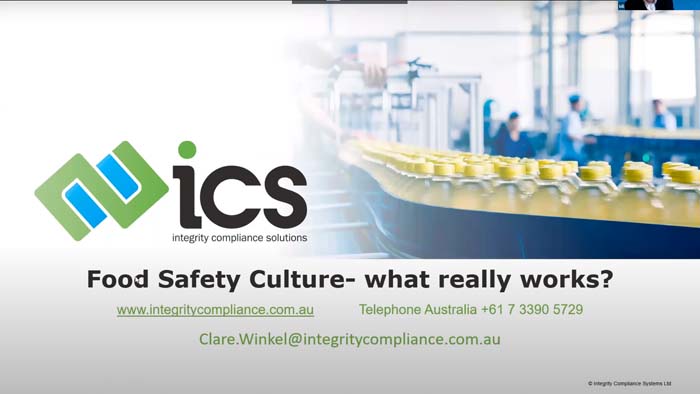
In this video, Bill McBride talks about creating a healthy food safety culture.
Privacy Policy |
Terms of Use
251 18th Street S., Suite 1200 Arlington, VA 22202 | Phone: (202) 220-0635
© SQFI. All Rights Reserved.
Web Design & Development by Matrix Group International, Inc.

