
Each year on June 7, the global community comes together for World Food Safety Day to reflect on 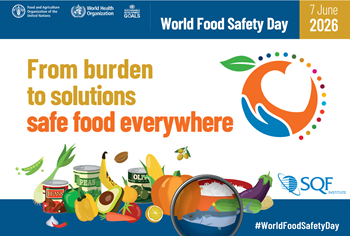 the importance of safe food and the systems that protect it. The 2026 theme, "From burden to solutions - safe food everywhere," emphasizes a critical shift: moving beyond understanding foodborne illness toward implementing data-driven, practical solutions that reduce risk and protect public health.
This theme strongly aligns with the mission of the Safe Quality Food Institute (SQFI), which has long championed science-based, globally recognized food safety and quality programs. As the food industry continues to evolve, the intersection between global awareness initiatives like World Food Safety Day and certification frameworks like SQFI becomes increasingly important.
Foodborne diseases remain a significant global challenge, causing hundreds of illnesses and impacting health systems, economies, and livelihoods worldwide. Changing environmental conditions, global supply chains, and emerging risks continue to reshape the food safety landscape.
Organizations like the World Health Organization and the Food and Agriculture Organization are addressing the challenge by releasing new, comprehensive data on foodborne disease burden in 2026. These insights are designed to help governments and businesses better understand where risks exist and how to prioritize interventions.
For SQFI, this emphasis on data is nothing new. SQF programs are built on risk-based methodologies that require facilities to identify hazards, implement preventative controls, and continuously monitor performance. The shared focus on evidence-based decision-making highlights a natural alignment between global food safety priorities and SQFI's certification standards.
The core message of World Food Safety Day 2026 is clear: data alone is not enough; action is what drives change. Reliable data enables stakeholders across the food chain to identify high-risk areas and apply targeted, cost-effective solutions.
This is precisely where SQFI plays a critical role. By providing a structured framework rooted in Hazard Analysis and Critical Control Point (HACCP) principles, SQFI empowers food businesses to translate insights into measurable improvements. Whether it's strengthening supplier verification, enhancing traceability, or improving employee training, SQF-certified sites are actively turning knowledge into practice.
Another key message of World Food Safety Day is the importance of collaboration. Food safety is not the responsibility of a single entity; it requires coordinated efforts across governments, industry, and consumers.
SQFI embodies this principle by bringing together stakeholders from every stage of the supply chain. From primary producers and manufacturers to retailers and foodservice providers, SQF certification creates a shared language for food safety and quality. This alignment fosters transparency, builds trust, and ensures that best practices are implemented consistently.
Moreover, SQFI’s emphasis on continuous improvement mirrors the global call for sustained commitment. Food safety is not a one-time achievement; it is an ongoing process that evolves alongside new risks, technologies, and scientific understanding.
World Food Safety Day serves as a powerful reminder that safe food is both a right and a responsibility. It encourages organizations to not only raise awareness but also take meaningful action, whether through education, investment in food safety systems, or adoption of internationally recognized standards.
For SQFI, this day is an opportunity to reaffirm our commitment of protecting consumers and strengthening the global food supply chain. By leveraging data, embracing science, and fostering collaboration, the industry can move from simply recognizing the burden of foodborne illness to actively reducing it.
As we mark World Food Safety Day 2026, the message is clear: progress is possible when knowledge is translated into action. The tools, standards, and data already exist, we must continue to use them effectively.
SQFI stands at the forefront of this effort, helping organizations worldwide implement practical solutions that deliver real-world impact. Together with global partners and initiatives, SQFI is contributing to a future where safe food is not an aspiration, but a reality everywhere.
As your organization makes plans to observe and celebrate World Food Safety Day 2026, SQFI encourages members of the SQF community to participate and help raise awareness across the food supply chain. To support your efforts, SQFI is offering branded social graphics featuring the SQF logo, along with the opportunity to customize graphics available through the World Health Organization World Food Safety Day Toolkit.
We encourage you to create awareness of the importance of food safety standards by downloading, adapting, and sharing our World Food Safety Day graphics on social media with the hashtags #WorldFoodSafetyDay, #SQFI, and #FoodSafety on June 7th. Feel free to add your customized copy or edit the graphics for your campaign.
Thank you for your partnership and your daily commitment to food safety.
Download and Customize World Food Safety Day Graphics

Automation is helping food safety teams strengthen traceability, close gaps faster, and stay audit-ready before pressure hits.

See how SQF Edition 10's Clause 2.3.5 turns change management into a dedicated requirement.

Edition 10 has a sharpened focus on the areas where data and experience showed we needed to raise the bar: food safety culture, change management, environmental monitoring, and audit scoring.
Privacy Policy |
Terms of Use
251 18th Street S., Suite 1200 Arlington, VA 22202 | Phone: (202) 220-0635
© SQFI. All Rights Reserved.
Web Design & Development by Matrix Group International, Inc.

